
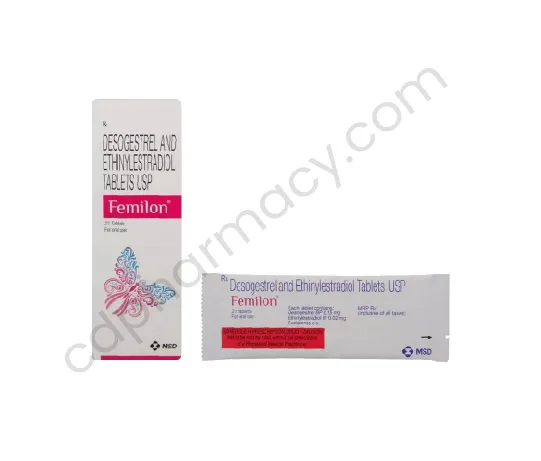
Femilon
Femilon is a combined birth control pill containing desogestrel 0.15 mg and ethinylestradiol 0.02 mg to prevent pregnancy. This low-dose hormonal contraceptive helps regulate menstrual cycles, reduce period-related symptoms, and prevent ovulation when taken correctly. CD Pharmacy provides access to Femilon with detailed product information, usage guidance, and safety resources to help users make informed decisions about their contraceptive options.
What is Femilon?
Here are a few key details of the Femilon contraceptive pill:
- As a combined oral contraceptive (COCP), Femilon is taken once a day for 21 days continuously, with a 7-day pill-free duration thereafter to grant complete protection against an unwanted pregnancy.
- This medicine is a low-dose hormonal pill that alleviates dysmenorrhea, manages menstrual cycles – making them more predictable, and reduces hormonal imbalance-related issues such as acne, heavier periods, etc.
Benefits of Femilon
Know the Femilon birth control benefits:
- The medication has a success rate of over 99% in preventing pregnancy from taking place.
- It maintains optimum ovarian function to lower the risk of ovarian cancer and cysts, as well as endometrial cancer.
- It prevents unpredictable cycles, making menstrual cycles happen at required intervals.
- The pill also reduces the severity of menstrual cramps, uterine contractions, and abdominal or pelvic pain.
- The medicine also makes period flow lighter, while lowering free-androgens from causing skin issues such as breakouts and acne.
How Does Femilon Work?
Here is everything about the action mechanism of Femilon medication for birth control:
- The pill suppresses ovulation to disallow ovaries from producing mature eggs. It does so by signalling the pituitary gland not to let the Follicle-Stimulating Hormone (FSH) and Luteinizing Hormone (LH) levels surge, inhibiting the maturity of the ovarian follicles. Without the mature egg, no fertilization occurs.
- It also blocks sperm from entering the fallopian tubes and the upper reproductive tract by thickening the cervical mucus. The sticky nature of the cervical mucus is so dense that sperm may not be able to travel ahead. This further prevents fertilization.
- Finally, it restricts implantation by making the endometrial lining thin. Thus, no pregnancy results, with the embryo not getting attached to the uterine wall.
Dosage of Femilon
Follow these dosage tips for Femilon:
- Each pill delivers a fixed dose of 0.15 mg Desogestrel and 0.02 mg Ethinylestradiol. The pack of Femilon contains 21 active pills of these combined synthetic progestin and estrogen.
- Swallow the medicine with water orally. Take the tablet at the same time every day for 21 consecutive days. Go pill-free for the next 7 days after 21 days of active pill dosage.
- Remember that within the 7-day no pill time, you will experience withdrawal bleeding.
- On day 8 after the placebo period, start with a new Femilon pack for continued protection against pregnancies (even if the bleeding does not stop).
- If you miss a pill dose, but it has been less than 12 hours late, take the missed dose immediately. However, if it has been over 12 hours late after missing the pill, do not take the missed dose. Rather, use a backup barrier method for the next 1 week.
How to Store Femilon?
Here are some storage guidelines to adhere to:
- Store the medicine at room temperature below 25°C (77°F).
- Do not freeze or expose the medication to direct sunlight, heat, or moisture.
- Avoid storing in damp and hot spaces.
- Keep the pills in their blister pack and original carton. Keep the medicine out of the reach of pets and children.
Side Effects of Femilon
Here are the possible outcomes at times to Femilon:
- The mild and temporary side effects are stomach upset, mild migraines, nausea, headaches, breast enlargement/pain or tenderness, mood swings or irritability, fluid retention and related weight changes, or irregular uterine bleeding or spotting between periods. These usually occur in the initial months of starting the pill.
- The severe but rare side effects are sudden or severe swelling or pain in a leg, deep vein thrombosis, sharp chest pain, coughing up blood, unexplained breathlessness, severe abdominal pain, or sudden vision changes. Seek medical attention immediately.
Interactions of Femilon
Here are the things to avoid with Femilon:
- Do not take along antifungals and antibiotics such as Griseofulvin and rifampicin.
- Avoid the simultaneous use of anticonvulsants such as topiramate, phenytoin, phenobarbital, and carbamazepine.
- Do not consume large amounts of grapefruit juice.
- Do not use herbal supplements like St. John’s Wort.
- Also, do not take specific HIV protease inhibitors such as efavirenz, ritonavir, etc.
Precautions of Femilon
Here are the precautions to keep in mind when using Femilon oral contraceptive pills:
- Consult a healthcare professional before starting the medication to review your medical history.
- Do not use this medicine if you have conceived or doubt that you are pregnant. It is also not advisable to take the pill during breastfeeding as estrogen may pass into the breast milk. If breastfeeding, you may opt for progestin-only pills or non-hormonal contraception.
- If you are over 35 years of age and smoke, there is a higher risk of developing cardiac complications such as heart attack or stroke when using combined birth control pills.
- Contraindications are uncontrolled heart disease, history of deep vein thrombosis or blood clots, severe hypertension, pulmonary embolism, liver disease, or cancers sensitive to hormones related to the uterus/breast.
Frequently Asked Questions
Femilon prevents pregnancy by stopping ovulation, thickening cervical mucus to make it difficult for sperm to reach an egg, and changing the uterine lining.
Yes. When taken correctly and consistently, Femilon is highly effective at preventing pregnancy.
Femilon is generally taken as one tablet daily for 21 days, followed by a 7-day pill-free interval before starting the next pack.
Yes. Femilon may help make periods more predictable and may reduce symptoms such as menstrual cramps and heavy bleeding.
Femilon may help improve acne in some users by reducing hormone-related effects that contribute to excess oil production and breakouts.
No. Femilon prevents pregnancy but does not protect against sexually transmitted infections (STIs). Condoms can help reduce STI risk.
Yes. Fertility usually returns after stopping Femilon, although the time for ovulation to resume may vary.
Femilon may not be suitable for people with certain conditions, including a history of blood clots, severe liver disease, uncontrolled high blood pressure, or certain hormone-sensitive cancers.
Author Details


Similar Products
Customer Reviews
Submit Your Review
Femilon has been a convenient daily birth control option for me. The information about its ingredients, dosage, and how it works was clear and helped me make an informed decision.