
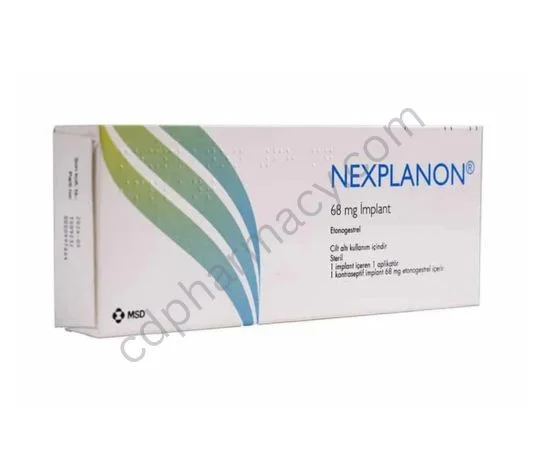
Nexplanon 68 mg
Nexplanon® (etonogestrel implant 68 mg) is a prescription single-rod hormonal contraceptive implant that prevents pregnancy. Inserted under the skin of the upper arm, it works by stopping ovulation and thickening cervical mucus, providing up to 3 years of over 99% effective contraception. CD Pharmacy offers detailed information about Nexplanon, including its uses, benefits, and safety considerations to support informed contraceptive choices.
What is Nexplanon?
Nexplanon is a small and flexible rod, whose size is like a matchstick. It is used as a Long-Acting Reversible Contraception (LARC) device in women to keep pregnancy at bay. The implant is inserted below the skin of the inner arm by a healthcare professional. It is beneficial for people who cannot tolerate estrogen-containing birth control. It is also easily detected by a CT scan or X-ray if needed.
Benefits of Nexplanon
Here are the reasons why Nexplanon is preferred for the following benefits:
- This hormonal skin implant is more than 99% successful for birth control.
- It does away with the worry of remembering daily/weekly/monthly birth control use, because once inserted, it stays effective for 3 years.
- In case you want to conceive, get the implant removed at any time by a doctor, and fertility returns quickly.
- It is a discreet option for contraception as it is not visible significantly. But you can feel the implant position from the top of the skin.
How Does Nexplanon Work?
Here is everything about the action mechanism of Nexplanon:
- The medication alters the hormones and keeps the progestin level low to suppress the release of Luteinizing Hormone (LH) by signaling the pituitary gland. When LH does not surge, the ovaries are unable to produce a mature egg, thus no fertilization risk.
- Further, the pill keeps the cervical mucus thick, causing a sticky barrier to form to prevent sperm from moving toward the fallopian tubes or uterus, thereby disallowing fertilization.
- Lastly, the medication makes the endometrium thinner so it does not support implantation. This means, even if there is a fertilized egg, it cannot attach to the uterine wall to cause a pregnancy.
Dosage of Nexplanon
The Nexplanon is available as a single implant rod in a box. Here is how this birth control implant should be used:
- The insertion of Nexplanon takes less than 5 minutes when done by a healthcare professional. To numb the inner arm, the doctor will apply local anesthesia. An applicator is used to place the rod under the skin.
- After which, the implant releases continuous doses of etonogestrel to stay active in preventing pregnancy for 3 years. If continued protection is desired, insert a new implant after 3 years.
- If the implant is inserted in the first 5 days of the menstrual cycle, the medicine starts working immediately, and no backup barrier birth control like condoms are needed. If the implant is inserted beyond this duration, use condoms or barrier method contraception for the first 7 days.
How to Store Nexplanon?
Store the hormonal implant for contraception between 20°C and 25°C (68°F to 77°F) in its original pack, away from pets and children. Do not expose the implant to direct heat, moisture, or sunlight, and avoid keeping it in damp and hot spaces. Also, do not refrigerate the contraceptive.
Side Effects of Nexplanon
Here are the possible consequences:
Common side effects (usually mild and temporary) may include:
- Dizziness
- Headaches
- Acne breakouts
- Breast pain or tenderness
- Emotional changes or irritability
- Abdominal discomfort
- Nausea
- Slight weight changes
Rare but serious side effects may include:
- Deep vein thrombosis (blood clots)
- Ectopic pregnancy
- Intense or sudden migraines
- Severe liver disease
- Localized infection or complications at the implant site
Interactions of Nexplanon
Things to avoid with Nexplanon are:
- Medicines to control seizures such as phenytoin, carbamazepine, phenobarbital, and topiramate.
- Certain HIV protease inhibitors and Hepatitis C medicines, or non-nucleoside reverse transcriptase inhibitors such as ritonavir or efavirenz.
- Specific antibiotics like rifabutin or rifampin.
- Supplements of herbal nature such as St. John’s Wort and others.
- Large amounts of grapefruit juice consumption.
Precautions of Nexplanon
Adhere to these precautions for safe use of Nexplanon:
- Do not use this contraception method if there is an active or suspected pregnancy, or a history of pulmonary embolism, or deep vein thrombosis.
- Avoid the implant if you have severe liver or kidney disorders, suspected progestin-related conditions such as breast cancer or other reproductive cancers, or undiagnosed vaginal bleeding.
- Check with a doctor for regular health monitoring if you use Nexplanon and have a history of clinical depression, diabetes, high blood pressure, or high cholesterol.
Frequently Asked Questions
Nexplanon prevents pregnancy mainly by stopping ovulation. It also thickens cervical mucus, making it harder for sperm to reach an egg, and changes the uterine lining to reduce the chance of implantation.
Nexplanon provides pregnancy protection for up to 3 years after insertion. It must be removed and replaced at the end of this period if continued contraception is needed.
Nexplanon is one of the most effective reversible birth control methods, providing over 99% effectiveness when properly inserted and used.
Nexplanon is inserted under the skin of the inner upper arm by a trained healthcare professional using a specialized applicator.
No. Nexplanon is an estrogen-free birth control option and contains only the progestin hormone etonogestrel.
Yes. Some people may experience lighter periods, irregular bleeding, or no periods while using Nexplanon. Changes in bleeding patterns are common with this implant.
If Nexplanon is inserted during the first 5 days of the menstrual cycle, it works immediately. If inserted at another time, additional contraception may be needed for the first 7 days.
Yes. Fertility usually returns after Nexplanon removal, and pregnancy can occur once ovulation resumes.
No. Nexplanon prevents pregnancy but does not protect against STIs. Condoms are recommended to reduce STI risk.
Nexplanon may not be suitable for individuals with certain conditions, including some hormone-sensitive cancers, unexplained vaginal bleeding, or severe liver disease. A healthcare provider can determine if it is appropriate.
Nexplanon may be suitable for many breastfeeding individuals. Discuss timing and suitability with a healthcare provider before insertion.
Nexplanon is removed through a minor procedure performed by a trained healthcare professional using a small incision near the implant site.
Author Details


Similar Products
Customer Reviews
Submit Your Review
I had a positive experience purchasing Nexplanon 68 mg Implant from CD Pharmacy. The product information was detailed, the ordering process was simple, and the overall service was convenient.