
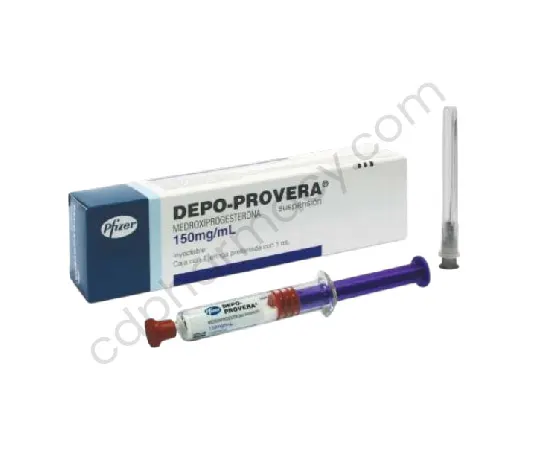
Depo-Provera Injection
Depo-Provera is a prescription birth control shot containing medroxyprogesterone acetate that helps prevent pregnancy for up to 3 months with a single injection. It is over 99% effective with on-time use and requires repeat injections every 12–13 weeks.
What is Depo-Provera Injection?
Here are the key details of the Depo-Provera shot for birth control:
- As a progestin-only contraceptive (no estrogen included), Depo-Provera is used to prevent pregnancy.
- It is administered as a subcutaneous or intramuscular injection.
- Classified as a Long-Acting Reversible Contraception (LARC), it offers protection against conceiving for up to 12 to 13 weeks.
- Apart from contraception, this shot also manages painful and heavy menstrual periods as well as giving relief from endometriosis pain.
Benefits of Depo-Provera Injection
Know the benefits for which people prefer the Depo-Provera LARC injection:
- Compared to daily birth control pills, Depo-Provera does not have to be used daily because once the shot is taken, it offers protection for 12 to 13 weeks against an unintended pregnancy.
- Using this contraception method leads to significantly shorter, lighter, and less painful periods.
- It has an effectiveness of over 99% when used typically as per doctor’s guidance.
- For breastfeeding women and those with cardiac function risks, this birth control option is ideal because of its estrogen-free composition.
How Does Depo-Provera Injection Work?
The active ingredient in this shot is medroxyprogesterone acetate. Once injected, it releases small amounts of progestin in the bloodstream for continuous protection from getting pregnant for up to 12-13 weeks. Here is the action mechanism in detail:
- The shot suppresses ovulation by inhibiting the gonadotropin secretion from the pituitary gland.
- Since it increases the progestin levels, it prevents the Luteinizing Hormone (LH) and Follicle-Stimulating Hormone (FSH) levels from increasing between menstrual cycles.
- As a result, the ovaries do not release a mature egg, restricting the scope of fertilization.
- The medicine thickens the cervical mucus, which creates a barrier for the sperm from entering the uterus or the upper reproductive tract.
- Lastly, it prevents the uterine lining from developing, keeping it thin enough that no implantation occurs.
Dosage of Depo-Provera Injection
The birth control injection, Depo-Provera, is available as a pre-filled syringe in a single-dose vial:
- It is injected 4 times a year, i.e., once every 12 to 13 weeks.
- It carries a dosage strength of 150 mg / 1mL (for intramuscular shot) and is injected deep into the gluteal or deltoid muscle.
- If using the 104 mg / 0.65 mL (for subcutaneous administration), inject below the skin of the upper abdomen or thigh.
- If given during days 1 to 5 of a menstrual cycle, the injection starts working within the initial 24 hours.
- If injected beyond this duration, use a backup non-hormonal birth control like condoms for 7 days.
- Since this method is an LARC, it may take 10-12 months after the last injection to restart the ovulation process properly.
How to Store Depo-Provera Injection?
Know the storage guidelines for the LARC shot:
- To keep the Depo-Provera injection in stable condition, store it at room temperature between 20°C and 25°C (68°F to 77°F).
- Do not remove the sterile kit until the healthcare professional is present to inject the shot.
- Make sure to protect it from exposure to excessive heat and cold. Do not freeze the medicine.
- Keep the vials or syringes upright in their original box. Also, do not let direct light contact the contraceptive.
Side Effects of Depo-Provera Injection
Common side effects may include:
- Breakthrough bleeding or spotting between periods
- Heavier bleeding during the first few months of use
- Little to no bleeding over time with continued use
- Mood changes or mood swings
- Breast tenderness
- Slight weight gain
- Headaches
- Nervousness
- Mild fluid retention (bloating)
Rare but serious side effects may include:
- Severe allergic reactions
- Deep vein thrombosis (blood clots)
- Liver dysfunction
- Bone mineral density loss with long-term use (more than 2 consecutive years), which may increase the risk of osteoporosis later in life.
Interactions of Depo-Provera Injection
Here are the known interactions to watch out for:
- Aminoglutethimide that’s used to treat Cushing’s syndrome.
- Antimicrobials such as rifampin.
- Other hormonal birth control used simultaneously.
- Anticonvulsants such as phenobarbital, carbamazepine, and phenytoin.
- Herbal supplements such as St. John’s Wort and others that affect the liver enzymes.
Precautions of Depo-Provera Injection
Here are the precautions to follow:
- Contraindications are (when not to use): active or suspected pregnancy, liver disease, abnormal uterine bleeding, history of pulmonary embolism, stroke, or deep vein thrombosis.
- Do not use this contraceptive method if you ever had breast cancer or reproductive cancer related to hormones.
- If other birth control methods are ineffective, use Depo-Provera for more than 2 years.
- Seek an alternative for birth control if there is pre-existing bone disease or bone issue, or have a heavy dependency on alcohol consumption.
- It should only be used long-term (longer than 2 years) if other birth control methods are inadequate.
Frequently Asked Questions
A single Depo-Provera injection provides pregnancy protection for about 3 months (12–13 weeks). Repeat injections are needed on schedule to maintain effectiveness.
Depo-Provera is highly effective when used correctly and injections are received on time. Effectiveness decreases if follow-up injections are missed or delayed.
Depo-Provera prevents pregnancy by suppressing ovulation, making it harder for sperm to reach an egg by thickening cervical mucus, and thinning the uterine lining.
Some women experience lighter periods or no periods after using Depo-Provera for several months. Changes in bleeding patterns are common with this birth control method.
If the injection is given during the first 7 days of the menstrual cycle, protection starts immediately. If given at another time, additional contraception may be needed for the first 7 days.
Depo-Provera may not be suitable for everyone, including people with certain medical conditions such as unexplained vaginal bleeding, some liver diseases, or a history of certain cancers. Consult a healthcare provider before use.
Depo-Provera may be an option for many breastfeeding individuals, but timing and suitability should be discussed with a healthcare professional.
No. Depo-Provera prevents pregnancy but does not protect against STIs. Condoms can help reduce STI risk.
Depo-Provera injections are typically given every 12–13 weeks to maintain continuous pregnancy protection.
Author Details


Similar Products

Customer Reviews
Submit Your Review
Depo-Provera has been a convenient birth control option for me because I don’t have to remember taking a pill every day. The 3-month schedule fits well with my routine, and the information provided helped me understand what to expect.